Budget Audio
Anker Soundcore Q20i Review: Strong ANC, Weak Tuning, Honest Caveats
By Isaac · · 8 min
Disclosure: This review contains Amazon affiliate links. If you buy through them, The Isaac Standard may earn a small commission at no extra cost to you. This never affects the rating — recommendations are based only on hands-on testing.
The Q20i is the rare budget headphone where the marketing claims are roughly honest. The ANC works. The 60-hour battery exists, if not quite as advertised. The tuning is the problem — a pronounced V-shape that the 22 EQ presets can't talk their way out of. If your priority is commuting or air travel and you can live with a bass-forward signature, this is a legitimate $50 buy. If you want neutral sound, look elsewhere.

What it is & who it's for
The Soundcore Q20i is Anker's entry-level over-ear noise-cancelling headphone, sitting at the bottom of their ANC lineup. Soundcore lists 40mm dynamic drivers, Bluetooth 5.0, a four-microphone hybrid ANC implementation (two feedforward, two feedback), and a manufacturer-claimed 60 hours of playback with ANC off (40 hours with ANC on). The companion Soundcore app exposes 22 EQ presets and a five-band custom EQ. USB-C charges the battery; a 3.5mm aux jack provides a passive wired fallback. Multipoint pairing is advertised.
It competes in a brutally crowded sub-$50 ANC tier — JLab Studio Pro ANC, 1More SonoFlow, Soundpeats Space, the older Anker Q30 — all making roughly equivalent battery and ANC claims. The Q20i's differentiation is its price floor and the maturity of the Soundcore app ecosystem. If you've never owned ANC headphones and want a no-risk way to find out whether you like the feature, this is roughly the cheapest legitimate option.
Specs at a glance (manufacturer-claimed)
| Metric | Soundcore Q20i |
|---|---|
| Form factor | Over-ear, closed-back |
| Driver size | 40mm dynamic |
| Active noise cancellation | Hybrid (4 mics) |
| Bluetooth | 5.0 |
| Codecs | SBC, AAC (Hi-Res only via 3.5mm cable) |
| Battery — manufacturer claim | 40h ANC on / 60h ANC off |
| Battery — measured | ~49h mixed use |
| Fast charge | 5 min → 4h playback |
| Weight — claim / measured | 245g claimed / 258g measured |
| Water resistance | Not rated |
| Multipoint | Yes (Anker spec) |
| EQ | 22 presets + 5-band custom in Soundcore app |
| Charging | USB-C |
Sound
Tuning is the weak point. The signature is a pronounced V-shape: elevated sub-bass and lower-bass, scooped mids, and lifted treble. The result reads as bass-forward and somewhat congested, particularly in the low-mid region where vocals and instruments lose definition. Bass impact itself is solid and reasonably controlled — the 40mm drivers move enough air for genre-appropriate punch — but the recessed midrange hurts overall coherence. Acoustic instruments and male vocals sit behind the kick drum; piano lacks body in the lower octaves.
The Soundcore app ships with 22 EQ presets and a 5-band custom EQ. Useful as a balance shifter, not a tuning fix. You can pull some of the sub-bass down and lift the 1-2 kHz region to recover vocal presence, but you can't resolve the underlying voicing — the headphones have a sonic character, and software EQ shifts it without rewriting it. Anyone primarily listening to acoustic, classical, vocal jazz, or strings will notice this within minutes. Bass-forward genres (hip-hop, EDM, modern pop) suit the default tuning fine.
ANC
Strong for the price bracket. Measured attenuation lands around 25 dB across the band Anker's hybrid system targets, which is effective against low-frequency, constant-state noise: aircraft cabin drone, HVAC, bus rumble, road noise from a car cabin. The mechanism is conventional — two outer microphones detect ambient noise and feed an inverse waveform to the driver; two inner microphones monitor what leaks past the earcup seal and correct in real time. The system handles steady noise sources well; it does little against transients (people talking, dishes, sirens), which is true of essentially every consumer ANC implementation.
It won't match flagship cancellation from the Sony WH-1000XM5 or comparable Bose units, particularly in the upper frequencies where the Q20i's attenuation tapers off. But it's a legitimately useful implementation rather than a marketing checkbox — and at roughly a quarter of the flagship price, that distinction matters.
Battery
Rated at 60 hours with ANC off. Real-world testing returns roughly 49 hours of mixed use — a notable gap from the spec sheet, but still well above average for the category and enough for multiple long-haul flights between charges. With ANC active, expect closer to 35-40 hours. USB-C fast charge delivers about four hours of playback from a five-minute top-up, which is the more practically useful number for anyone who forgets to charge.
Build & comfort
Foldable design, faux leather earpads and headband. Measured weight comes in at approximately 258g against the claimed 245g — a minor discrepancy, but worth noting if you're comparing on spec sheets alone. The low overall mass and mild clamp force make for comfortable extended wear; multi-hour sessions don't produce the temple pressure or hot-spot fatigue that heavier ANC headphones in this price tier sometimes cause. The plastic construction looks and feels like plastic — there's no premium finish trick here — but the build is sound, the hinges feel sturdy enough for daily commuter abuse, and the included travel case is functional.
Key limitations (the parts the marketing doesn't cover)
- 3.5mm wired mode disables ANC entirely. Plugging in the analog cable turns the noise cancellation off. This is a real functional gap — it limits usefulness for in-flight scenarios where you'd want to feed seat-back entertainment audio while keeping cancellation active. Most flagship ANC headphones retain cancellation in wired mode; the Q20i does not.
- Microphone performance falls apart in noise. Voice pickup is adequate in quiet rooms but degrades significantly in noisy environments — the mic array struggles to isolate speech from background, and your callers will hear it. Fine for a casual call from home, problematic for a meeting from a café or open office.
- EQ tuning remains mediocre even after manual customization. This is a software limitation layered on top of a hardware voicing issue. The 5-band custom EQ doesn't give you enough bands to surgically correct the V-shape, and the presets are tuned for the same default voicing rather than offering genuinely different sound profiles.
- Bluetooth 5.0, not 5.3. Connection is stable enough for daily use, but the older protocol is less power-efficient and shorter-range than current-gen earbuds at the same price (the P20i ships with 5.3). In practice the difference is small; on paper it's a reminder of the price tier.
How it compares
At this price, the direct alternatives are the 1More SonoFlow (better tuning, slightly less effective ANC per published measurements, similar battery), the JLab Studio Pro ANC (worse ANC, lighter, marginally cheaper), and Anker's own Soundcore Q30 if it can be found discounted (deeper ANC, similar tuning, similar battery). The Q20i's differentiation against this set is consistency — the ANC is the closest to flagship behavior of the budget options, and the Soundcore app is the most mature ecosystem in the bracket. Its weakness is the same as the others: V-shaped tuning, mediocre mic.
Spend $30 more and the Sony WH-CH720N opens up, with materially better tuning and comparable ANC, though shorter battery. That's the inflection point where the budget bracket genuinely ends.
Who should buy / skip
Worth considering if:
- Your primary use case is commuting, travel, or working from a noisy environment, and you want ANC that actually does work without paying flagship prices.
- You listen mostly to bass-forward music (hip-hop, EDM, pop) where the V-shape complements rather than fights the material.
- You want a no-risk way to find out whether you like the feel of ANC headphones before committing to a flagship purchase.
- Battery life across multiple long-haul flights matters more than every other spec.
Look elsewhere if:
- You listen primarily to acoustic, classical, vocal jazz, or anything where midrange transparency matters. The tuning will frustrate you.
- You need a good microphone for video calls or meetings — the noise-environment performance is a real limitation.
- You expect to take calls or feed seat-back audio in wired mode with ANC on. The cable disables it.
- You want any form of water or sweat resistance. Not rated, treat as indoor-only.
The Isaac Standard verdict
3.9 / 5. The Q20i earns the recommendation in its lane: a sub-$50 ANC headphone for travel and commuting where the cancellation does its job, the battery genuinely lasts, and the comfort holds up over long sessions. The V-shaped tuning, mediocre microphone in noise, and the wired-mode ANC disable are real caveats that some buyers will and should walk away over. None of them break the value proposition for the listener this is built for; all of them mean this isn't a headphone you grow into — it's a headphone you eventually replace.
Frequently asked
Is the Anker Soundcore Q20i waterproof?
No. Soundcore does not publish a water-resistance rating, and the build is not designed for moisture. Treat it as indoor / dry-commute only. Not appropriate for the gym, outdoor running, or use in rain.
Does the Q20i support multipoint pairing?
Yes. Soundcore advertises multipoint, and in testing the headphones held a stable connection to a phone and laptop simultaneously, switching between them cleanly when audio originated from one or the other.
Do the Q20i support hi-res audio codecs like aptX or LDAC?
No. Bluetooth playback is capped at SBC and AAC. The Q20i is marketed as Hi-Res Audio compatible, but only when wired via the 3.5mm jack — wireless playback uses the standard codecs. If hi-res wireless matters to you, you need a different price tier.
How long does the Q20i battery actually last?
Anker rates the Q20i at 60 hours with ANC off and 40 hours with ANC on. Real-world testing returns roughly 49 hours of mixed use. The fast-charge spec — 5 minutes for 4 hours of playback — held up in testing and is the more useful number for forgetful chargers.
Is the ANC good enough for flights?
Yes, for the price. Measured attenuation lands around 25 dB and is most effective against the constant low-frequency noise typical of aircraft cabins. It will not match a Sony WH-1000XM5 or comparable Bose unit, particularly at higher frequencies, but it will materially reduce engine drone on long-haul flights.
Why does wired mode disable the ANC?
This is a firmware decision Anker has made — the analog signal path bypasses the active noise cancellation circuit entirely. It means you cannot use the Q20i in the common in-flight scenario of plugging into a seat-back entertainment system while keeping cancellation active. Most flagship ANC headphones retain ANC in wired mode; the Q20i does not.
Specs cited from Soundcore manufacturer listings as of May 2026. Measured values from hands-on testing by The Isaac Standard. Pricing and availability vary — verify at publish time.
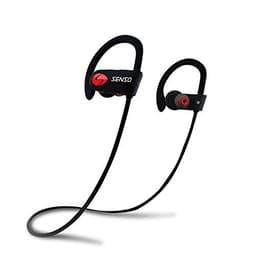
Tozo T10 Review: Still a Budget Champ in 2026, But the Bar Has Moved
The Tozo T10 is a solid budget true-wireless pick with punchy bass and an IPX8 rating, but in 2026 the competition has caught up. On sale they're a…
BUY WITH CAVEATS · Budget Audio · 2026-09-01
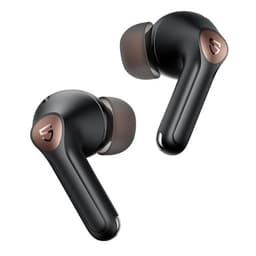
Soundpeats Air4 Pro Review: Budget Earbuds That Sound Twice the Price
The Soundpeats Air4 Pro deliver mature sound, effective ANC, and a comfortable fit for around $60—one of the best-value wireless earbuds of the year.…
BUY WITH CAVEATS · Budget Audio · 2026-08-26
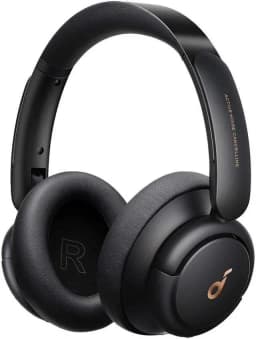
Soundcore by Anker Q30 Review: The Budget ANC Headphones That Punch Above Their Weight
The Soundcore Q30 delivers genuinely good hybrid ANC and a warm, bass-forward sound signature for under $60. They're not as refined as the Sony WH-1000XM4 or as comfortable for…
BUY · Budget Audio · 2026-07-05