Folding Squat Rack Review: The Honest Truth About Wall-Mounted Power Racks
By Isaac · · 7 min
Disclosure: This review contains Amazon affiliate links. If you buy through them, The Isaac Standard may earn a small commission at no extra cost to you. This never affects the rating — recommendations are based only on hands-on testing.
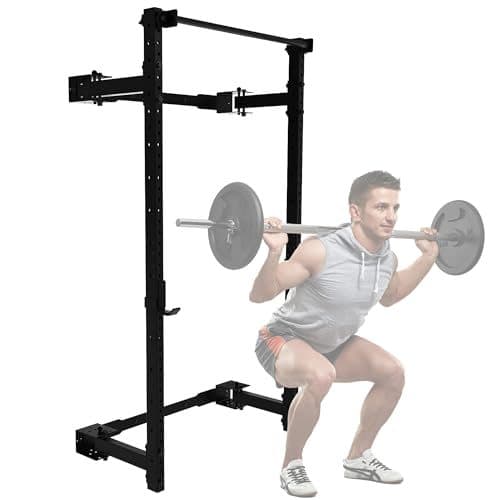
What it is & who it's for
A folding squat rack (like the PRx Performance Profile Rack or the Rogue Fold-Back Rack) is a wall-mounted power rack that folds flat against the wall when not in use. It's designed for home gym owners who want the functionality of a squat stand or half-rack but don't have the floor space for a permanent cage.
This review covers the general category of folding racks, focusing on the trade-offs you need to know before buying. I'll break down what they do well, where they fall short, and who should absolutely not buy one.
Specs at a glance (manufacturer-claimed)
| Metric | Folding Squat Rack (e.g., PRx or similar) |
|---|---|
| Fold depth | 4–6 inches (manufacturer-claimed) |
| Rack weight | 100–150 lb |
| Safety arm depth | 12–16 inches |
| Minimum floor clearance | 6 ft |
| Minimum wall width | 4–5 ft |
| Installation time | 2–4 hours |
| J-hook swap time | ~30 seconds |
Installation: Not a Weekend Project for the Faint of Heart
The biggest hurdle is installation. You're bolting a 100–150 lb steel structure into your wall—studs for wood framing, concrete anchors for masonry—and it must be level. If you're not comfortable with a drill and a level, budget for a professional installer.
Expect 2–4 hours of work. The rack is heavy enough to require a second person to lift it into place. Once it's up, it's not coming down easily—this is a permanent commitment to your wall.
The Space-Saving Payoff: Fold It Up, Get Your Garage Back
The main selling point is real: folded, the rack protrudes only 4–6 inches from the wall. You can park a car in front of it, use the space for other workouts, or just avoid the gym-in-the-living-room look. For a garage gym or spare room, this is a genuine game-changer.
The catch: the rack only folds once the barbell is removed and the J-hooks are cleared. Swapping the J-hooks takes about 30 seconds, but it's an extra step you won't have with a fixed rack.
Safety and Functionality: The Trade-Off You Must Know
A folding rack is essentially a squat stand with a wall attachment. The safety spotter arms are 12–16 inches deep—shallower than a full power rack's. If you fail a squat, the bar will catch, but you need to be positioned correctly. For bench press, those arms are often too shallow to catch the bar at the chest, so you'll need a spotter or a separate bench with safeties.
You also need at least 6 feet of floor clearance in front of the rack to squat or bench comfortably. And if you're tall, the pull-up bar height might be limiting—check the specs before buying.
Key limitations (the parts the marketing doesn't cover)
- Shallow safety arms The safety spotter arms are not as deep as those on a full power rack. This means they won't catch a failed bench press at the chest level for most lifters. You'll need a spotter or a separate bench with safeties, which defeats some of the purpose.
- Permanent wall mount You're bolting this into your wall. If you rent, you'll need permission from your landlord, and you'll leave holes when you move. If you move frequently, this is a hassle.
- Not a full power rack You can't do band work, use a landmine, or attach many accessories that a full cage offers. The folding rack is a squat stand, not a multi-station gym.
How it compares
Compared to a full power rack (like the Rogue R-3 or Titan T-3), a folding rack saves floor space but sacrifices depth and accessory compatibility. A full rack has deeper safeties, more attachment points, and is more stable for heavy lifting. If you have the floor space, a full rack is the better investment for serious lifting.
Compared to a standalone squat stand (like the Rogue S-2), a folding rack is more stable because it's bolted to the wall, and it takes up less floor space when folded. But a squat stand is portable and doesn't require permanent installation. If you need to move your gym, a squat stand is easier.
Compared to a freestanding half-rack (like the Titan X-3), a folding rack is more space-efficient, but the half-rack is more versatile and can be moved. The half-rack also has deeper safeties, making it safer for bench press.
Who should buy / skip
Worth considering if:
- You have a dedicated wall space in a garage or basement and want to maximize floor area.
- You're a homeowner who is comfortable with DIY installation.
- You primarily squat and deadlift, and you have a spotter for bench press.
- You want a clean, professional look that folds away when not in use.
Look elsewhere if:
- You rent and can't drill into walls or get landlord permission.
- You need a full power rack for accessories, band work, or deep safeties.
- You're not handy and don't want to pay for professional installation.
- You have the floor space for a full rack—it's a better value for the same price.
The Isaac Standard verdict
3.5 / 5. The folding squat rack solves a specific problem: you want a real squat rack but don't have the floor space. It delivers—stable, fold-away, and just 4–6 inches off the wall when stored. But the 12–16 inch spotter arms are a genuine limitation for bench press, and the 2–4 hour installation is a permanent commitment. Serious lifters who own their space and are willing to do the work will find it a solid choice. Renters and anyone who wants a full cage should skip it and get a freestanding rack.
Frequently asked
Can I bench press with a folding squat rack?
Yes, but you'll need a spotter or a separate bench with safeties. The spotter arms on most folding racks are only 12–16 inches deep—too shallow to catch the bar at chest level—so benching alone is risky.
How much wall space do I need?
A wall at least 4–5 feet wide and at least 6 feet of floor space in front of the rack. Check the manufacturer's specs for exact dimensions.
Is installation difficult?
Yes—plan on 2–4 hours with a drill, a level, and a second person. You'll need to locate studs or use concrete anchors. If you're not comfortable with tools, hire a professional.
Can I do pull-ups on a folding rack?
Yes, most folding racks include an integrated pull-up bar. If you're tall, check the bar height before buying—you may need to bend your knees.
Pulsio Air Massage Gun Review: Is This Budget-Friendly Percussion Therapy Worth It?
The Pulsio Air Massage Gun delivers a decent percussive massage for around $50, but its 3,200-RPM motor and real-world 1.5-hour battery will…
BUY WITH CAVEATS · Home Gym & Recovery · 2026-08-31
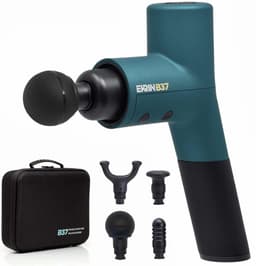
Ekrin B37 Percussion Massager Review: The Honest Trade-Offs After 3 Months
The Ekrin B37 delivers 56 lbs of stall force, runs quieter than a Theragun Pro, and feels premium for the price. The 2.4-lb weight and missing carry…
BUY · Home Gym & Recovery · 2026-08-24
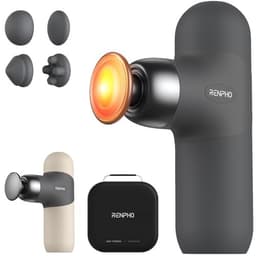
Renpho R3 Mini Massage Gun Review: Honest Trade-Offs After Testing
The Renpho R3 is compact and quiet—good for travel and light recovery—but lacks the power and battery life serious athletes need. A solid budget pick…
SKIP · Home Gym & Recovery · 2026-08-17