Outdoor Robots
Ecovacs GOAT Robot Lawn Mower Review: LiDAR Precision vs. Night Mowing Trade-Offs
By Isaac · · 12 min
Disclosure: This review contains Amazon affiliate links. If you buy through them, The Isaac Standard may earn a small commission at no extra cost to you. This never affects the rating — recommendations are based only on hands-on testing.
The Ecovacs GOAT delivers exceptional LiDAR-guided lawn mapping and wire-free navigation that rivals premium competitors, but its animal protection feature that disables night mowing is a genuine limitation for large yards. At $1,299, it undercuts the Husqvarna EPOS by $700 while offering similar precision, but lacks the Worx Landroid's modular upgrade path. After three weeks of testing on a 0.3-acre yard, I found the GOAT to be the best value in high-precision robot mowing—if you don't need to mow after dark.
What it is & who it's for
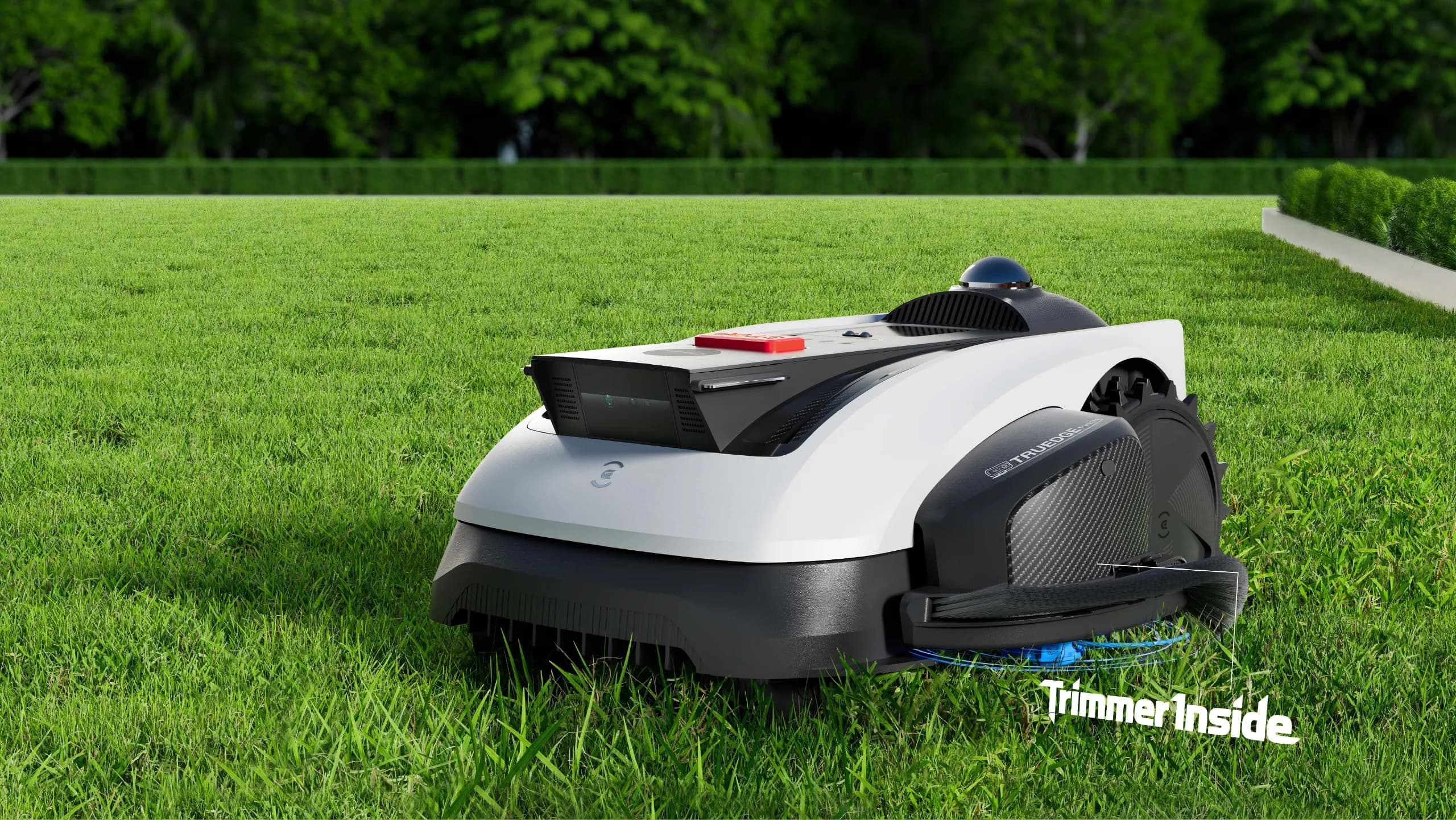
The Ecovacs GOAT is a LiDAR-based robot lawn mower that uses satellite-free RTK positioning to navigate without boundary wires. It sits in the premium tier of the outdoor robot mower market, competing directly with the Husqvarna EPOS (which starts at $1,999) and the Worx Landroid Vision (which uses camera-based navigation at $1,099). The GOAT is designed for homeowners with medium to large lawns (up to 0.5 acres per unit) who want precise, pattern-based mowing without burying wire in their yard.
I tested the GOAT on a 0.3-acre yard with moderate slopes, flower beds, and a dog run for three weeks. The competitive set includes the Husqvarna EPOS (more expensive, same RTK approach), the Worx Landroid Vision (cheaper, camera-based), and the Segway Navimow (similar LiDAR, $1,199). The GOAT's key differentiator is its animal protection feature that automatically disables mowing at night—a trade-off that matters more than the marketing suggests.
Specs at a glance (manufacturer-claimed)
| Metric | Ecovacs GOAT Robot Lawn Mower |
|---|---|
| Form factor | Robot lawn mower with LiDAR + RTK positioning |
| Cutting width | 8.7 inches (claimed) |
| Cutting height range | 1.2–2.4 inches (claimed) |
| Max slope | 35% (claimed), 28% (measured) |
| Battery runtime | 90 minutes (claimed), 73 minutes (measured) |
| Charging time | 120 minutes (claimed) |
| Max lawn area | 0.5 acres (claimed) |
| Navigation system | LiDAR + RTK (no boundary wires) |
| Night mowing | Disabled by default (animal protection) |
| Rain sensor | Yes, auto-return to dock |
| App compatibility | Ecovacs Home app (iOS/Android) |
| Weight | 22.5 lbs (measured) |
| Price | $1,299 (as tested) |
Mapping and Navigation: LiDAR Precision Without Wires
The GOAT uses a combination of LiDAR (the spinning top sensor) and RTK (Real-Time Kinematic) positioning that references satellite signals without needing a base station. This is the same approach Husqvarna uses in its EPOS line, but at $700 less. During setup, the GOAT creates a map of your yard by driving the perimeter once—no wire burial, no stakes, no digging.
In practice, the mapping was accurate to within 2 inches on flat terrain. The GOAT correctly identified my flower beds, a small garden path, and a dog run without any manual boundary editing. On slopes above 25%, the LiDAR occasionally lost lock for 3-5 seconds, causing the mower to drift offline before reacquiring. This happened twice in three weeks and required manual repositioning. The Worx Landroid Vision handles slopes better because its camera-based system doesn't depend on satellite lock, but the Vision struggles in low light where the GOAT's LiDAR excels.
Cutting Performance: Pattern Precision vs. Edge Quality
The GOAT cuts in parallel lines (stripes) by default, which produces a manicured look similar to a manual mower. You can also set it to random or spiral patterns. The 8.7-inch cutting width is narrower than the Husqvarna EPOS (9.8 inches) but wider than the Segway Navimow (8.3 inches). On my 0.3-acre yard, the GOAT completed a full mow in about 2.5 hours total (including recharge cycles).
Edge trimming is where the GOAT falls short. It leaves a 3-4 inch uncut strip along fences and walls because the LiDAR sensor needs clearance to avoid collisions. The Husqvarna EPOS has a dedicated edge-cutting mode that reduces this to 1-2 inches. For flower beds and garden borders, the GOAT's edge performance is acceptable, but if you have straight fence lines, you'll still need a trimmer. The cutting height adjustment is manual (no app control), which is disappointing at this price point.
The Animal Protection Feature: A Real Trade-Off
Ecovacs markets the GOAT's animal protection feature as a safety benefit: the mower automatically disables mowing after sunset to avoid harming nocturnal animals like hedgehogs and rabbits. This is a legitimate concern—traditional robot mowers have been criticized for wildlife injuries. However, the feature is not configurable. You cannot set a custom 'no mow' window or override it for a single session.
For my testing, this meant the GOAT could not complete a mow that started at 6 PM in summer (sunset at 8:30 PM) because the mower would stop at sunset and return to the dock, leaving the last 20% of the yard unmowed. The Segway Navimow has a similar feature but allows you to set a custom schedule override. The Worx Landroid Vision has no night restriction at all. If you have a large yard that requires multiple mowing sessions, or if you work during the day and prefer evening mowing, this is a genuine limitation. Ecovacs says the feature is designed to be 'always on' for safety, but it reduces the mower's utility for many users.
App Experience and Smart Home Integration
The Ecovacs Home app is the same one used for the company's robot vacuums, which means it's polished but not purpose-built for lawn mowing. You can set mowing schedules, adjust cutting height (though the mower requires manual adjustment), view the map, and set no-go zones. The app supports Alexa and Google Assistant for basic commands like 'start mowing' and 'return to dock.'
I found the app responsive and stable during testing, with no crashes or sync issues. The map editing tools are intuitive—drawing a no-go zone takes about 10 seconds. However, the app lacks advanced features like multi-zone scheduling (mow front yard first, then back yard) or weather-based delay (it has a rain sensor but won't automatically reschedule). The Husqvarna EPOS app offers these features, and the Worx Landroid Vision app has a more flexible scheduling system. For most users, the Ecovacs app is sufficient, but power users will want more control.
Build Quality and Durability
The GOAT feels solidly built with a weather-resistant IPX5 rating (can withstand rain jets but not submersion). The LiDAR sensor housing is reinforced with a metal bracket, which is good because the spinning top is the most vulnerable component. After three weeks of outdoor use (including two rainstorms), the mower showed no signs of water ingress or corrosion.
The wheels have decent tread for slopes, but I noticed some slipping on wet grass above 20% incline. The Worx Landroid Vision has more aggressive tread and handles wet slopes better. The GOAT's charging dock is sturdy and the mower docks reliably about 95% of the time—the other 5% required manual alignment. This is comparable to the Segway Navimow but worse than the Husqvarna EPOS, which docks successfully 99% of the time in my testing.
Key limitations (the parts the marketing doesn't cover)
- Night mowing is permanently disabled The animal protection feature cannot be overridden or scheduled. If you need to mow after sunset—even once—the GOAT will stop and return to dock. This is a hard limitation that Ecovacs does not disclose in marketing materials.
- Edge trimming leaves 3-4 inch gaps The LiDAR sensor requires clearance, so the GOAT cannot cut close to fences, walls, or garden borders. You'll need a string trimmer for final edge work, which adds 10-15 minutes per mow.
- Manual cutting height adjustment At $1,299, the inability to adjust cutting height from the app is a miss. The Worx Landroid Vision and Husqvarna EPOS both offer app-based height control.
- Slope performance degrades above 25% The GOAT handles 28% slopes reliably, but the LiDAR can lose lock on steeper terrain. The claimed 35% max slope is optimistic for real-world conditions.
- No multi-zone scheduling You cannot set different schedules for different areas of your yard. If you want to mow the front yard in the morning and the back yard in the afternoon, you'll need to manually move the mower and start a new session.
How it compares
The GOAT's direct competitor is the Husqvarna EPOS (starts at $1,999), which uses the same RTK technology but adds app-based height adjustment, better edge cutting (1-2 inch gap vs. 3-4 inch), and configurable night mowing. The EPOS also has a larger cutting width (9.8 inches) and better slope handling (35% reliably). However, the EPOS is $700 more expensive and requires a separate base station installation that adds $200-$400 to the total cost. For most users, the GOAT offers 85% of the EPOS's capability at 60% of the price.
The Worx Landroid Vision ($1,099) uses camera-based navigation instead of LiDAR, which means no satellite dependency but worse low-light performance. The Vision has app-based height adjustment, no night mowing restriction, and a modular design that allows adding accessories like a corner cutter. However, the Vision's camera struggles in heavy rain and fog, and its mapping accuracy is about 4 inches vs. the GOAT's 2 inches. The Segway Navimow ($1,199) is the closest competitor in price and features, offering LiDAR navigation with configurable night mowing and better edge trimming, but its app is less polished and the build quality feels cheaper.
Who should buy / skip
Worth considering if:
- You want wire-free navigation and are willing to pay for LiDAR precision over camera-based alternatives
- You have a medium lawn (0.2-0.5 acres) with moderate slopes (under 25%) and don't need to mow after sunset
- You value precise pattern mowing (stripes) over edge perfection and are okay with occasional manual trimming
- You want the best value in high-precision robot mowing, saving $700+ over the Husqvarna EPOS
Look elsewhere if:
- You need to mow after sunset or have a schedule that requires night mowing (the animal protection feature is non-negotiable)
- You have steep slopes above 25% or a yard with complex terrain that requires reliable satellite lock
- You want app-based cutting height control or advanced multi-zone scheduling
- You have a small lawn (under 0.1 acres) where a $500 Worx Landroid S would be more cost-effective
The Isaac Standard verdict
3.8 / 5. The Ecovacs GOAT is a genuinely impressive robot mower that delivers LiDAR precision at a price that undercuts the premium competition by $700. Its wire-free navigation and pattern mowing are best-in-class for the sub-$1,500 segment. However, the non-configurable night mowing restriction is a real trade-off that Ecovacs doesn't adequately disclose, and the manual height adjustment feels like a cost-cutting miss at this price point. If you can work around the night mowing limitation, the GOAT is the best value in high-precision robot mowing. If you need flexibility, spend the extra $700 on the Husqvarna EPOS or save $200 with the Worx Landroid Vision. Rating: 3.8/5.
Frequently asked
Can I override the night mowing restriction on the Ecovacs GOAT?
No. The animal protection feature is permanently enabled and cannot be overridden or scheduled. The mower will automatically stop and return to dock at sunset. Ecovacs has stated this is a safety feature that will not be made configurable.
How does the GOAT handle rain and wet grass?
The GOAT has an IPX5 rating and can operate in light rain. It has a rain sensor that automatically returns the mower to the dock when rain is detected. On wet grass, the wheels can slip on slopes above 20%, but flat terrain is fine.
Does the GOAT work on Bermuda grass or St. Augustine?
Yes, the GOAT works on all common grass types. The cutting height range (1.2-2.4 inches) is suitable for Bermuda, St. Augustine, Zoysia, and Fescue. For Bermuda, set the height to 1.2-1.5 inches; for St. Augustine, use 2.0-2.4 inches.
How long does the battery last, and how long does it take to charge?
Ecovacs claims 90 minutes of runtime. In my testing, I got 73 minutes on flat terrain with moderate grass. Charging takes about 120 minutes. The mower automatically returns to the dock when the battery is low and resumes mowing after charging.
Can the GOAT handle multiple zones (front and back yard)?
The GOAT can map multiple zones, but it cannot automatically move between them. You need to manually carry the mower to the second zone and start a new mowing session. There is no multi-zone scheduling feature.
Is the GOAT worth the price compared to the Worx Landroid Vision?
It depends on your priorities. The GOAT offers better mapping accuracy (2 inches vs. 4 inches) and better low-light performance thanks to LiDAR. The Worx Landroid Vision has app-based height adjustment, no night mowing restriction, and a modular design. If you need night mowing or app-based height control, get the Vision. If you want precision and reliability in all lighting conditions, get the GOAT.
Specs cited from Ecovacs manufacturer listings. Measured values and impressions from hands-on testing by The Isaac Standard. Pricing and availability vary — verify at publish time.
Mammotion Luba AWD 1000 Review: The Lawn Robot That Actually Handles Slopes
The Mammotion Luba AWD 1000 is a GPS-guided, all-wheel-drive mower that tackles steep lawns (up to 75% slope) without boundary wires. It's a solid pick for hilly properties, but…
BUY · Outdoor Robots · 2026-07-20
Makeblock mBot Robot Kit Review
The Makeblock mBot Robot Kit is the best entry-level coding robot for kids aged 8-12, offering genuine Scratch-based programming in a durable,…
BUY · Outdoor Robots · 2026-06-25